
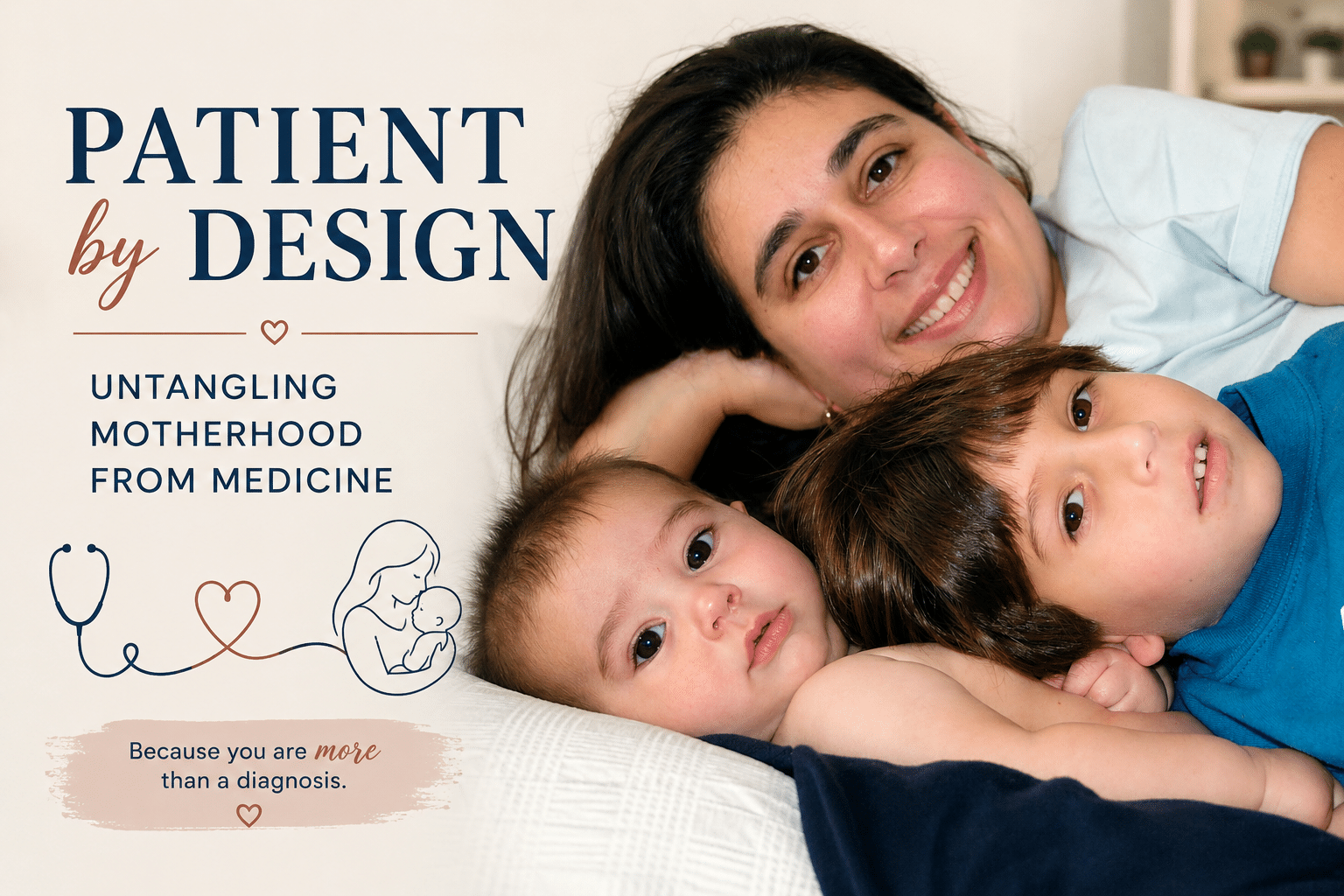
As a healthcare provider, I see daily how the medicalized motherhood approach affects women’s health. Many patients come to me after experiencing quick interventions instead of thorough exploration of their concerns. Menstrual pain is often dismissed as normal, irregular cycles are treated with medication before investigation, and pregnancy is frequently managed through layers of routine testing and protocols. This pattern of medicalized motherhood leaves many women questioning their body’s natural signals.
Ready for Personalized Support?
I offer one-on-one coaching and consultation sessions tailored to your unique health needs.
Limited sessions available each month • Virtual appointments only
Why This Matters to Me
Why this matters to me is simple: first and foremost, I am a woman — and I am a healthcare provider. My background as a lay midwife, trained in Canada and with experience supporting women in Central America, showed me the importance of strengthening women through knowledge and trust in their bodies. Working in settings with limited resources taught me that careful observation, patience, and an understanding of normal physiology often accomplish what protocols and equipment cannot. Women who understood what their bodies were doing approached birth and recovery with far less fear.
The book Medicalized Motherhood offered a clear historical lens on these patterns, tracing how care that was once relational and observational gradually became standardized and procedural. I am sharing my reading of its key insights with you because they directly affect how women receive care today, and because recognizing these patterns is the first step toward making informed choices within them.
The Early Shift in Care and Medicalized Motherhood
The pattern of medicalized motherhood often begins in adolescence. A teenager with irregular cycles — something completely normal in the years after menarche, when the hormonal feedback loops governing the cycle are still maturing — is frequently prescribed hormonal contraception to “regulate” her body. In reality, the medication does not regulate anything; it overrides the natural cycle and replaces it with a withdrawal bleed. The underlying question of why her cycles are irregular often goes unasked.
In cases of severe menstrual cramps (dysmenorrhea), young girls are often given SSRIs (antidepressants). Patients are rarely told that these medications can be difficult to discontinue due to withdrawal symptoms, or that they may interfere with bone density development during the critical years when young women should be building peak bone mass for long-term skeletal health. The years between menarche and the mid-twenties are when the skeleton lays down most of the bone it will rely on for the rest of life, and anything that disrupts that process during this window can have consequences that do not surface until decades later.
While some medications provide benefits for certain symptoms, they frequently lead to additional issues and a repeating cycle of symptom management rather than addressing root causes. A side effect from one prescription becomes the reason for the next, and a young woman can find herself managing a growing list of issues that began with a problem no one fully investigated. This early experience teaches many young women that their bodies are unreliable and in need of constant medical oversight — a belief that shapes how they approach every stage of health that follows.
Cycle Tracking in the Age of Medicalized Motherhood
Many women then turn to cycle-tracking apps. Used well, these tools can be genuinely empowering: they help a woman learn the rhythm of her own cycle, recognize her fertile window, and notice meaningful changes over time. The information itself is not the problem. The problem is how it is framed.
Many apps treat the textbook 28-day cycle as the standard against which everything else is measured, and they flag normal biological variation as a problem to be corrected. A cycle that runs a few days long, an ovulation date that shifts month to month, or a slight change in flow can trigger an alert that something is wrong, when in fact healthy cycles vary considerably from woman to woman and from month to month. This is how cycle tracking can quietly contribute to the culture of medicalized motherhood — by turning ordinary fluctuation into a source of anxiety and a sense of deficiency in one’s own body. By the time a woman decides she wants to conceive, she may already approach her fertility from a place of worry rather than confidence.
Pregnancy and the Medicalized Motherhood Model
Pregnancy often brings intensified routine surveillance under the medicalized motherhood approach. Multiple ultrasounds, genetic screenings, bloodwork, glucose testing, and repeated monitoring become the default for nearly every pregnancy, regardless of individual risk. Each test has its place and many provide genuinely useful information, but applied universally and without context, they can reframe a healthy pregnancy as a problem waiting to be discovered.
Much of the difficulty lies in how results are interpreted. A borderline or ambiguous finding can shift a woman from the “low-risk” to the “high-risk” category, and once that label is applied it rarely comes off, even when follow-up testing is reassuring. The high-risk designation then justifies more frequent monitoring and a lower threshold for intervention, so a single uncertain result can set the tone for the remainder of the pregnancy. Repeated emphasis on what might go wrong can steadily erode a woman’s confidence in her body’s natural ability to carry a pregnancy, replacing trust with a sense that she is being watched for failure.
Labor, Birth, and Medicalized Motherhood
During labor, standardized protocols frequently shape the experience, and interventions tend to follow one another in sequence. An induction scheduled for convenience can produce contractions more intense than the body would generate on its own. Continuous monitoring and IV lines restrict the movement that helps a baby descend, which can slow labor. An epidural may then be needed to manage the heightened pain, and augmentation medication may be added to restart a labor that has stalled. Each step is reasonable on its own, yet together they can build a cascade in which one intervention creates the conditions for the next.
We often forget that giving birth is not a disease but a natural physiological process. It is the medical community’s responsibility to guide and support this natural function of reproduction rather than treat it as a medical emergency requiring management. When a birth that began as low-risk ends in an outcome no one intended, women frequently come away feeling that their bodies failed them. In many cases, the body was responding exactly as it should to the sequence of interventions it was given. Recognizing this distinction matters, because it changes whether a woman carries forward trust in her body or doubt about it.
Postpartum Care in a Medicalized System
After birth, a woman enters a period of significant physical and emotional transformation that, in most cases, calls for rest, support, and time rather than intervention. Yet normal features of recovery are often quickly labeled and treated. The emotional intensity of the early weeks can be categorized as a disorder before anyone asks about sleep, feeding, pain, or the support a woman has at home. Temporary hormonal shifts can be turned into ongoing diagnoses, and the natural process of pelvic floor healing can be described as dysfunction before healing has had a chance to occur.
This extends the pattern of medicalized motherhood into the postpartum period, turning what should be a time of recovery and bonding into another series of medical concerns. This is not to dismiss the conditions that genuinely require care — some absolutely do, and recognizing them is essential. The point is one of sequence: basic needs and normal recovery deserve to be addressed first, before a woman is handed another label. When support comes before pathology, many women recover with far less intervention than the system tends to assume.
A Practical Framework for Decision-Making
When any intervention is suggested, I encourage you to ask these three clear questions:
- Is this necessary for my specific situation right now?
- What are the documented short- and long-term risks?
- Does evidence show it performs better than expectant management or simpler supportive measures?
These questions are not a way of refusing care; they are a way of participating in it. Some interventions answer all three clearly — newborn pulse oximetry, for example, is non-invasive, low-risk, and genuinely valuable. Others deserve a more careful conversation about timing, alternatives, and whether they are warranted in your particular case. A practitioner who is confident in a recommendation should be able to answer these questions directly, and the conversation itself often clarifies what truly serves you. This approach supports informed, individualized decisions rather than automatic protocol.
Recognizing Coercive Language
It is worth learning to recognize language that pressures rather than informs. Phrases such as “the hospital won’t allow that,” “you’re not allowed to go past your due date,” or warnings framed around worst-case outcomes are designed to produce compliance through fear rather than understanding. They move the conversation away from your specific situation and toward a default everyone is expected to accept.
Genuine medical guidance sounds different. It explains the actual risk in your case, presents the alternatives, and leaves room for your questions. A woman who is informed is far harder to pressure than one who is frightened, and you are entitled to explanations clear enough to make a real decision. If a recommendation comes wrapped in urgency but without information, that is reason to slow down and ask for the information.
Final Thoughts on Medicalized Motherhood
Your body is not inherently broken. Menstruation, pregnancy, birth, and recovery are physiological processes that function well for most women when they are supported rather than overridden. Understanding the patterns of medicalized motherhood gives you the ability to ask better questions and to tell the difference between care that supports your body and care that simply manages it.
None of this means rejecting medicine. Modern medicine saves lives, and there are moments when intervention is exactly what is needed. The goal is discernment — knowing which interventions serve you, asking for the reasoning behind the rest, and approaching your own health with informed confidence rather than inherited fear. Find a practitioner who is committed to you — one who will listen, explore root causes where possible, and work through your concerns alongside you. If you have questions about your cycle, pregnancy, or postpartum recovery, seek out someone who will address them with you rather than around you.

Let’s Create a Plan for Your Health
If this article resonated with you, I invite you to book a private consultation for guidance that respects your body’s natural signals.
Virtual sessions available • Menstrual health, fertility, pregnancy, and postpartum support
Recommended resources:
My full review of the book Medicalized Motherhood
Research on SSRI use in adolescents and bone health
