

Prepare to challenge everything you thought you knew about hormones, particularly estrogen, and breast cancer risk. This article unearths groundbreaking information based on an interview with Dr. Jeffrey Dach, a leading expert in bioidentical hormones. Drawing from his insights and extensive research, it offers a perspective you won’t hear in most doctor’s offices, one that could transform how you view hormonal health and protection against disease.
This topic often sparks confusion and concern: the relationship between hormones, particularly hormone replacement therapy (HRT), and breast cancer risk. For decades, the narrative has been that estrogen causes breast cancer and that HRT is inherently dangerous. However, re-evaluations of pivotal studies like the Women’s Health Initiative (WHI) paint a more hopeful picture. This piece aims to clarify these complexities, incorporating Dr. Dach’s expertise to empower informed health decisions.
Addressing the Fear: HRT and Breast Cancer

The widespread fear linking HRT to breast cancer largely originates from the 2002 findings of the WHI study’s first arm. This trial used Premarin, a conjugated equine estrogen, combined with medroxyprogesterone acetate (MPA), a synthetic progestin. It was halted early due to perceived increases in breast cancer, blood clots, and heart disease risks, leading to a sharp drop in HRT use and a lingering belief that all hormone therapies are hazardous.
A key oversight, however, is the distinction between bioidentical hormones—chemically identical to those produced by the body—and synthetic progestins. Experts like Dr. Dach stress this difference as central to understanding breast cancer risk. Bioidentical options mimic natural processes more closely, potentially avoiding the pitfalls of synthetics.
Delving deeper, the WHI’s design and outcomes warrant scrutiny. The study involved over 16,000 postmenopausal women aged 50-79, randomized to receive either the hormone combination or placebo. After an average of 5.2 years, the trial reported a 26% increase in invasive breast cancer risk, prompting its premature termination. Yet, subsequent analyses have highlighted that the absolute risk was small—about eight additional cases per 10,000 women annually—and many participants had prior hormone use or other confounding factors. This nuance suggests the initial panic may have overstated the dangers, particularly when isolating estrogen’s role from that of synthetic additions.
The Troubling Role of Synthetic Progestins
Synthetic progestins, especially MPA, emerge as particularly problematic. Evidence indicates these compounds are carcinogenic. In animal models, MPA administration to mice induces breast cancer with an 80% incidence over 52 weeks, even used deliberately to create cancer in labs. The WHI’s 18-year follow-up from the Premarin + MPA arm showed a 44% increase in breast cancer mortality compared to placebo. Dr. Dach attributes this harm to MPA, not estrogen, as it interferes with androgen receptors, blocking testosterone’s protective effects against breast cancer.
Mechanistically, synthetic progestins disrupt hormonal balance by mimicking progesterone but with altered actions. They can promote cell proliferation in breast tissue, unlike natural progesterone. Despite these risks, synthetic progestins persist in some HRT regimens for conditions like dysfunctional uterine bleeding, though their use in menopause management is increasingly questioned given the carcinogenic potential. This highlights the need for personalized approaches, prioritizing bioidenticals to minimize dangers. For instance, studies on MPA in rodents demonstrate consistent tumor induction, with histopathological features mirroring human ductal carcinomas, underscoring the translational relevance.
Moreover, the interference with androgen signaling is critical. Testosterone normally suppresses estrogen-driven proliferation, but MPA’s anti-androgenic properties negate this, fostering an environment conducive to oncogenesis. Clinicians must weigh these insights when prescribing, favoring regimens that avoid such synthetics. Over time, this shift could reduce unnecessary fears and improve outcomes for women seeking hormonal support.
Re-evaluating Estrogen: A Surprising Protector?
Shifting focus to estrogen reveals a protective role, contrary to common fears. The WHI’s second arm, involving hysterectomized women on Premarin alone or placebo, initially reported a 23% breast cancer risk reduction after five years. The 2017 18-year follow-up amplified this, showing a 40-45% mortality reduction from breast cancer in the treated group. These findings challenge the idea that estrogen fuels cancer, suggesting natural forms can safeguard against it.
Historically, estrogen treated metastatic breast cancer in the 1940s and 1950s, yielding 30% remission rates. This seems paradoxical, but Dr. V. Craig Jordan’s research explains it: After estrogen deprivation (e.g., from anti-estrogen drugs like tamoxifen, which he invented), cancer cells upregulate receptors, becoming “starved.” Reintroducing estrogen overstimulates mitochondria, triggering apoptosis—programmed cell death. Jordan’s work underscores estrogen’s dual nature: stimulatory in excess but apoptotic when timed correctly post-deprivation.
Estrogens vary in action. Estrogen receptor beta (ERβ) acts as a tumor suppressor, less stimulatory than alpha (ERα). Estriol (E3), a weaker estrogen, primarily targets ERβ. Premarin contains unsaturated B-ring steroids that favor ERβ, enhancing benefits. Estradiol activates both receptors equally. This receptor specificity explains why certain estrogens protect while others might pose risks in specific contexts. For example, in laboratory models, ERβ activation inhibits proliferation and promotes differentiation in breast cells, countering ERα-driven growth. These mechanisms invite a reevaluation of estrogen not as a villain but as a potential ally in cancer prevention when used appropriately.
Further exploration reveals that estrogen’s protective effects extend to long-term health. In the WHI estrogen-alone group, benefits included lower risks of hip fractures and colorectal cancer, alongside the breast cancer mortality reduction. This data, often overshadowed by the combined therapy arm’s results, emphasizes the importance of context—hysterectomy status, hormone type, and individual health profiles—in determining HRT safety and efficacy.
The Critical Difference in Estrogen Delivery: Oral vs. Transdermal
While natural estrogen offers benefits, delivery method matters, especially for blood clot risk. Oral estrogen, like Premarin or estradiol, undergoes first-pass liver metabolism, stimulating clotting factors and elevating risks of deep vein thrombosis (DVT), pulmonary embolism (PE), and strokes—evident even in oral contraceptives.
Transdermal or vaginal estrogen bypasses the liver, avoiding this effect. Studies, including those by Scarabin, confirm transdermal safety, with no increased clotting risk. Switching to topical forms could prevent thousands of strokes yearly. Dr. Dach recommends avoiding oral estrogen, favoring transdermal or vaginal routes, even for those with DVT history under supervision. Vaginal delivery absorbs two to three times better than skin, ensuring consistent levels.
This distinction extends beyond clots; transdermal methods maintain steadier hormone levels, potentially enhancing protective effects against breast cancer by mimicking natural rhythms more accurately. Research indicates that avoiding the hepatic first-pass reduces not only thrombotic events but also inflammatory markers, contributing to overall cardiovascular health in menopausal women. Thus, delivery choice is as crucial as the hormone itself, guiding safer HRT strategies.
The Protective Power of Natural Progesterone
Natural bioidentical progesterone counters synthetic progestins, offering breast cancer protection. A 2017 review by Alan Lieberman, titled “In Defense of Progesterone”, concludes it prevents breast and endometrial cancers. Confusion arises from conflating synthetics’ harms with natural progesterone’s benefits.
Progesterone’s advantages go beyond uterine protection. Receptors span the body, including the brain, where it inhibits estrogen’s stimulation, aiding anxiety and mood. It supports bone density, making it valuable post-hysterectomy. In breast tissue, it promotes differentiation over proliferation, reducing cancer susceptibility. Studies show progesterone suppresses invasive behaviors in cancer cells independently of estrogen receptors.
Incorporating natural progesterone in HRT balances estrogen, fostering a protective hormonal milieu. Clinical observations suggest it mitigates estrogen’s potential risks while amplifying benefits, such as improved sleep and reduced hot flashes. This holistic role positions progesterone as essential in comprehensive hormone therapy, challenging outdated views that lump it with harmful synthetics.
Testosterone: A Hidden Guardian Against Breast Cancer
Testosterone’s role in breast cancer prevention is underappreciated. It downregulates stimulatory ERα and, via metabolites, targets tumor-suppressive ERβ. Clinical studies by Dr. Rebecca Glaser and Gary Donovitz link postmenopausal testosterone replacement to 35-40% risk reduction.
Testosterone treats existing cancer, with cases of mass regression when administered directly into the breast alongside an aromatase inhibitor. When cancers resist anti-estrogens, they may hijack testosterone pathways; synthetics blocking this worsen prognosis. Pellet therapy studies show sustained benefits, reducing invasive cancer incidence.
Testosterone enhances overall vitality, improving libido, energy, and muscle mass, while its anti-cancer effects make it a multifaceted guardian. Emerging evidence from cohort studies reinforces its safety, with no increased cancer risk observed in long-term users, further supporting its inclusion in balanced HRT protocols.
A Comprehensive Breast Cancer Prevention Program
Beyond hormones, Dr. Dach’s protocol integrates nutrition and lifestyle. Iodine supplementation is key; breast tissue concentrates iodine, and deficiency raises risk. It shifts estrogen metabolism from harmful oxidants to anti-cancer compounds like 2-methoxyestradiol and estriol. Japan’s high-iodine diet correlates with low breast cancer rates. Supplementation inhibits tumor growth in models.
DIM (diindolylmethane), from cruciferous vegetables, supports prevention by modulating estrogen metabolism and inhibiting cancer cell growth. It enhances enzyme activity, reducing carcinogenic pathways.
Selenium deficiency heightens all cancer risks, including breast, by impairing DNA repair. Aim for serum levels of 135-200 ng/mL; toxicity is rare. Low levels predict poorer survival.
Vitamin D’s low levels pervade as a cancer risk factor. Target above 50 ng/mL for immune support and reduced incidence. It regulates cell growth and apoptosis.
Methyl folate aids those with MTHFR mutations, optimizing estrogen metabolism and preventing carcinogenic buildup. Mutations link to higher risk, making supplementation crucial.
Vitamin K, especially K2 (menaquinone), reduces breast cancer risk in observational studies by inhibiting growth and promoting apoptosis. From fermented foods, K2 shows promise, though K1 lacks association. Mechanisms involve γ-carboxylation and non-canonical pathways like oxidative stress induction.
This holistic approach, combining bioidentical hormones with targeted nutrients, offers robust prevention, emphasizing evidence-based strategies to lower risk significantly. Lifestyle factors like regular exercise, a vegetable-rich diet, and stress reduction further amplify these benefits, creating a synergistic shield against disease. By embracing this perspective, women can navigate hormonal health with confidence, moving beyond fear to empowerment.
Dr. Dach’s Books
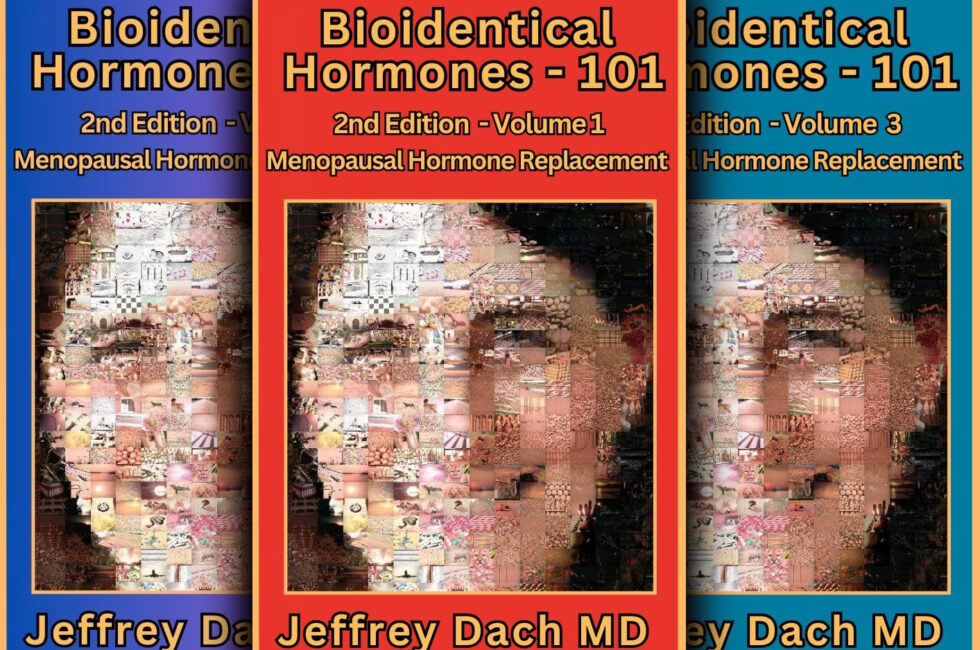
Bioidentical Hormones 101 by Dr. Jeffrey Dach
#commissionearned