
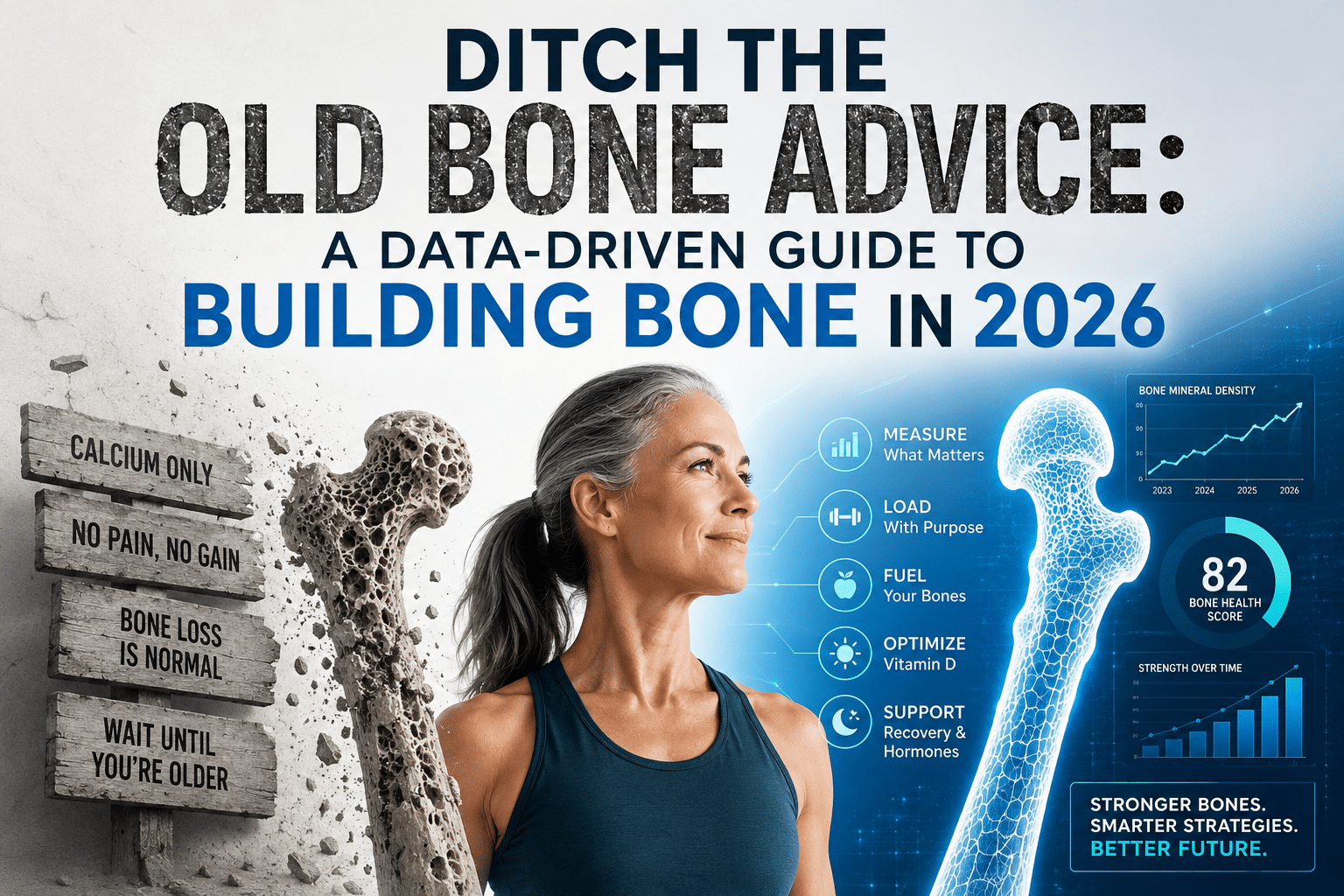
Bone health is undergoing a major shift in 2026. Instead of relying on outdated calcium-heavy advice, more people are turning to bio-optimization — a data-driven strategy using biomarkers, targeted nutrition like berberine, and personalized protocols to actually build and maintain stronger bones.
Want a Personalized Bone Health Plan Instead of Guesswork?
While this article gives you the latest 2026 strategies for bone health — from smarter supplementation to key biomarkers — true transformation happens when the protocol is built specifically for your body.If you’re ready to move beyond generic advice and get clear, data-driven recommendations tailored to your labs, hormones, and lifestyle, I can help. 👉Learn more about my Bone Health Coaching Programs
Many individuals, particularly in midlife, look for more detailed information on bone health. Standard advice often covers only part of the picture. A closer look at bone remodeling and the factors that influence it can provide additional context for decision-making.
The Living Architecture of Bone Health
Bones function as dynamic tissue rather than fixed structures. They undergo continuous remodeling through the activity of osteoclasts, which break down bone, and osteoblasts, which form new bone. This process supports skeletal maintenance, micro-damage repair, and mineral regulation. Peak bone mass typically occurs in the late 20s to early 30s. Afterward, remodeling can shift toward gradual net loss, influenced by factors such as menopause and reduced estrogen levels, ongoing inflammation, blood sugar variations, limited physical activity, or changes in hormones such as testosterone.
Many people become aware of bone concerns after a fracture from low-impact activity or through DEXA scan results indicating osteopenia. At that point, imbalances in remodeling may have developed over time. A DEXA scan measures bone mineral density at a given moment but does not capture ongoing turnover dynamics or contributing elements such as inflammation or nutrient processing.
Bio-optimization integrates testing and targeted adjustments to support bone remodeling based on available data. This approach fits within broader efforts to maintain function and mobility over time.
Why Modern Biomarkers Matter
Practitioners in functional and integrative settings often include blood markers that reflect bone turnover. These can show changes within weeks to months. Key examples include CTX (C-terminal telopeptide of type I collagen), which indicates bone breakdown, and P1NP (Procollagen type 1 N-propeptide), which indicates bone formation. Other markers such as bone-specific alkaline phosphatase, osteocalcin, vitamin D, parathyroid hormone, and hormone panels provide additional information.
These bone turnover markers are recognized by groups including the International Osteoporosis Foundation as tools for tracking responses to interventions. They tend to shift ahead of DEXA results, sometimes within three months. A decrease in CTX or increase in P1NP, for instance, can offer early feedback on a protocol. Retesting at intervals of three to six months allows for adjustments in nutrition, supplements, or activity levels.
Used alongside DEXA or other imaging, these markers add detail without replacing clinical evaluation. They can be relevant for individuals with risk factors such as family history, certain medications, or conditions like diabetes.
Nutrition That Addresses Bone Remodeling
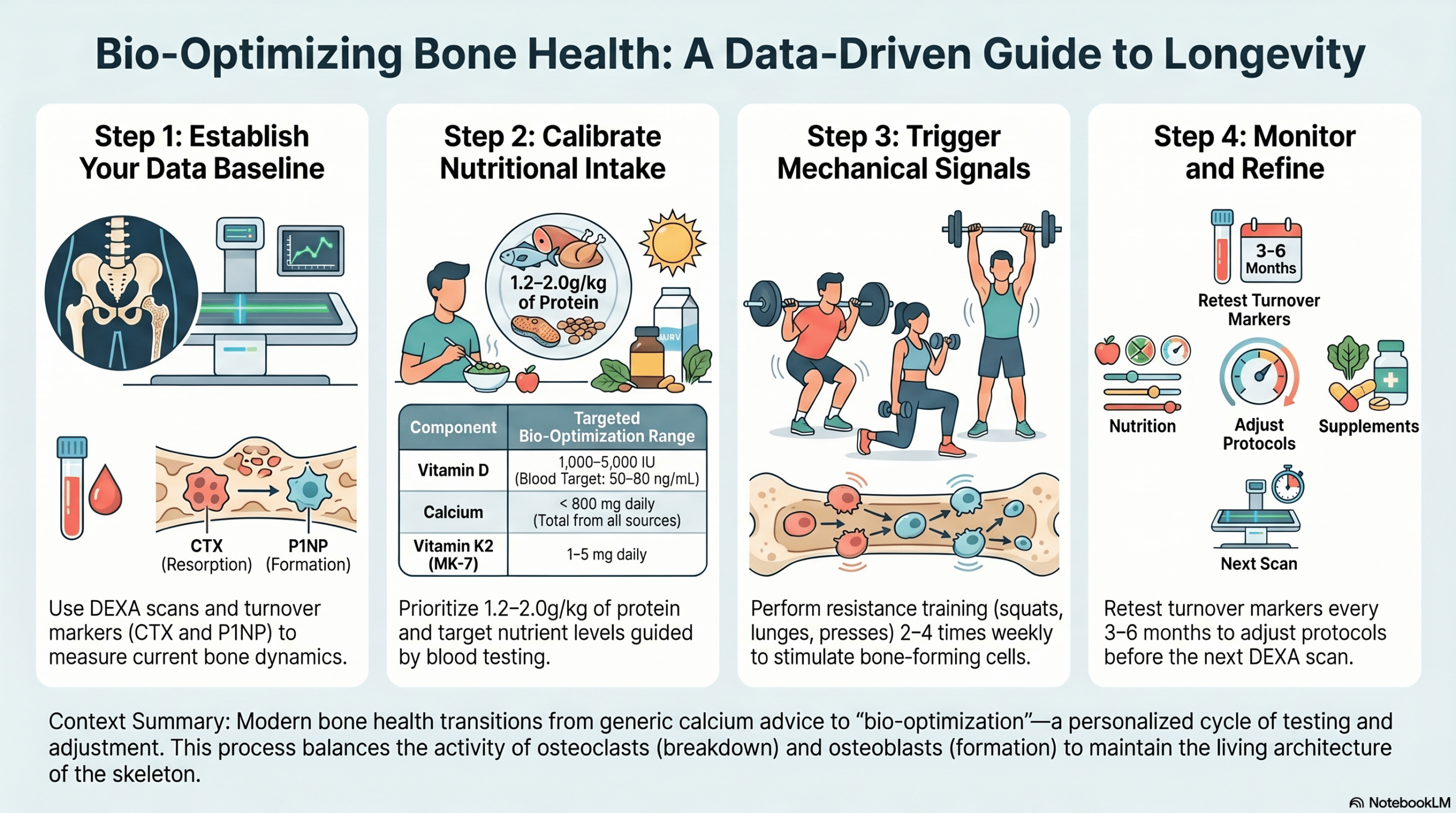
Core nutritional elements include protein intake in the range of 1.2–2.0 grams per kilogram of body weight to support the collagen framework of bone. Calcium intake is often kept at or below 800 mg per day from all sources, with emphasis on food forms such as leafy greens when possible. Vitamin D supplementation commonly ranges from 1,000 to 5,000 IU per day, with dosing guided by blood testing to maintain levels between 50 and 80 ng/mL. Magnesium intake is adjusted to maintain balance with calcium, as the two minerals interact in absorption and utilization. Vitamin K2, particularly in the MK-7 form, is often used at 1 to 5 mg per day to support the activation of proteins involved in directing calcium into bone tissue.
Berberine, an alkaloid present in plants including barberry and goldenseal, has drawn attention in research for its interaction with cellular pathways. It activates AMPK, which plays a role in metabolic regulation. Studies in animal models and smaller human trials with postmenopausal participants have examined its association with osteoblast activity, reduced resorption, and shifts in turnover markers. Effects may also relate to blood sugar regulation and inflammation. Doses in studies have ranged from 100–500 mg daily, often divided and used in cycles. Consultation with a clinician is advised due to potential interactions with medications.
Additional Nutritional and Supportive Elements
Collagen peptides provide amino acids for the bone matrix. Certain formulations have been studied for their relation to osteoblast activity and modest changes in density measurements when paired with other nutrients, at doses around 5 grams daily.
Systemic enzymes are sometimes considered for their role in managing inflammation that can affect resorption. Nattokinase receives attention for circulation support. Dietary patterns that include leafy greens, fatty fish, prunes, beets, berries, olive oil, and green tea supply supporting nutrients and polyphenols. Gut microbiome balance contributes to nutrient uptake and moderation of inflammation. Attention to the calcium-magnesium balance helps support proper utilization and reduces potential competition between the minerals.
Movement, Hormones, and Recovery Factors
Physical activity provides mechanical signals to bone cells. Resistance training with progressive increases in load—such as squats, lunges, presses—and regular weight-bearing movement like walking align with research on bone maintenance. Sessions of two to four times per week are commonly discussed in protocols.
Hormones including estrogen, testosterone, thyroid factors, and cortisol interact with bone remodeling. Attention to sleep duration of seven to nine hours and stress management practices supports these balances. Recovery periods allow remodeling processes to occur.
Developing a Personalized Approach
A structured process begins with assessment: DEXA scan, bone turnover markers, nutrient levels including vitamin D, and hormone evaluation. From there, nutrition and supplementation are adjusted—incorporating vitamin D in the 1,000–5,000 IU range with testing to reach 50–80 ng/mL, calcium at or below 800 mg total daily, balanced magnesium, and vitamin K2 at 1–5 mg—movement is incorporated, and progress is reviewed through follow-up testing every few months. This cycle supports ongoing refinement based on individual data.
Outcomes depend on age, genetics, baseline status, and adherence. For example, a postmenopausal individual with osteopenia may track marker changes within months and density shifts over one to two years. Preventive efforts in earlier decades focus on sustaining bone mass.
Bone Health in the Context of Overall Function
Attention to bone maintenance relates to mobility, metabolic processes, and daily independence. Bones participate in mineral storage and contribute to broader physiological regulation. Approaches that support bone health can fit into routines aimed at sustained function across decades.
Consider reviewing current testing options, discussing berberine or collagen with a practitioner, or evaluating strength training and nutrient sources with attention to calcium under 800 mg daily, vitamin D guided to 50–80 ng/mL, vitamin K2 at 1–5 mg, and magnesium balance. Small, consistent adjustments guided by information can support long-term skeletal health.
Ready to Build Stronger Bones in 2026?
Reading about biomarkers, berberine, and optimized protocols is a great first step — but real results come from a plan tailored to your body, your labs, and your goals.If you’re serious about protecting or rebuilding your bone health without guesswork, I invite you to work with me directly.In my coaching programs, we run the right tests, interpret your unique data, and create a personalized bio-optimization protocol that includes nutrition, supplementation, movement, and ongoing support.
Limited spots available each month.
Book Your Bone Health Consultation Here
This article is for educational purposes only and not medical advice. Please consult a qualified healthcare professional before making changes to your supplement regimen, diet, exercise program, or testing plan. Individual results vary.
