
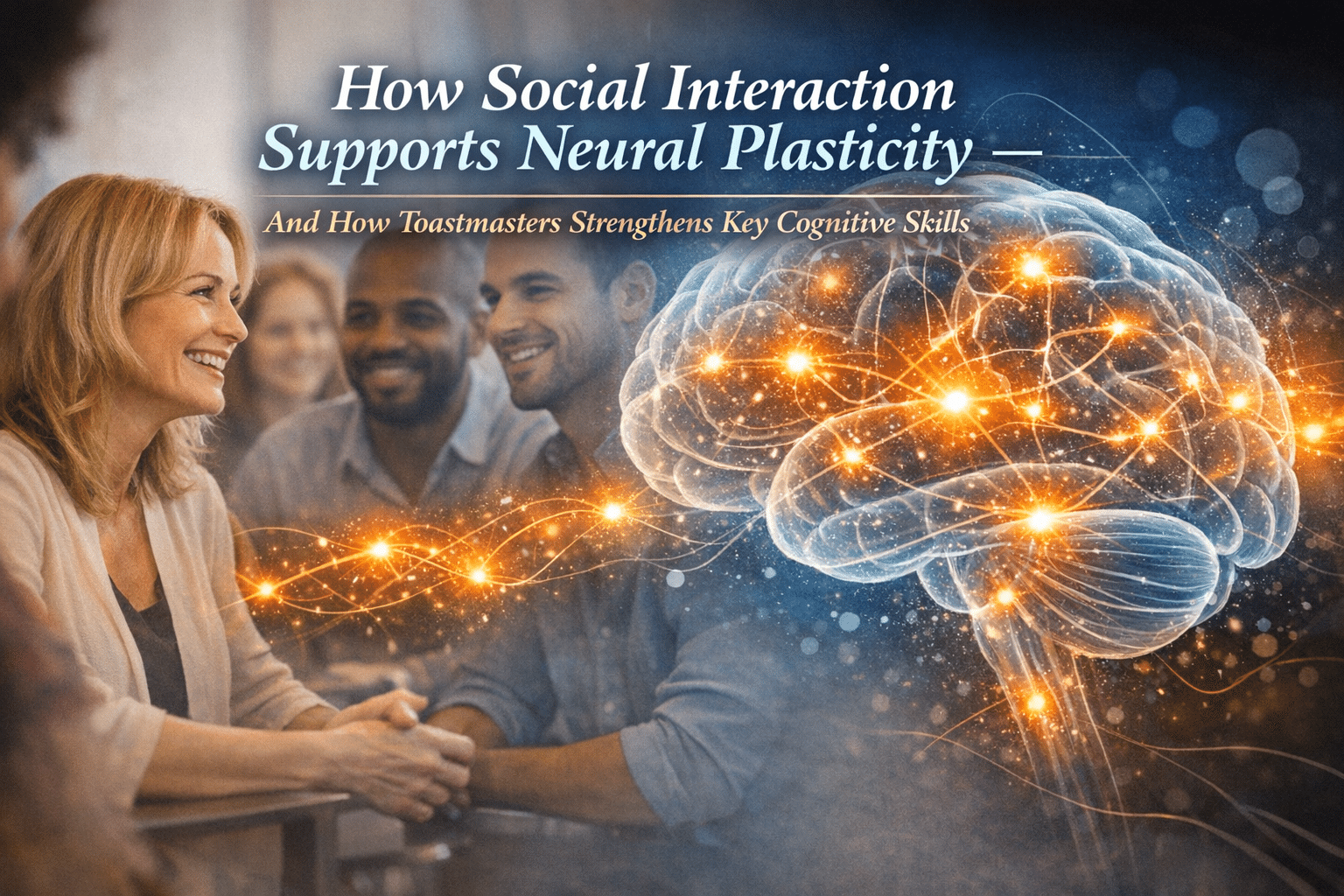
Social interaction and neural plasticity are closely connected, with research showing that engaging with others stimulates meaningful brain adaptation. Toastmasters provides a structured environment where communication and leadership skills strengthen these cognitive pathways. Understanding this relationship helps explain why communication‑rich environments support long‑term cognitive growth and emotional resilience.
I began working with Toastmasters after experiencing a severe injury that affected my ability to focus and speak clearly. While recovering, I joined the Better Speakers Toastmasters Club, where I found a supportive community that helped me rebuild confidence, strengthen my communication skills, and retrain my cognitive abilities. What started as a personal rehabilitation tool quickly became a meaningful part of my growth. The structure, encouragement, and consistent practice offered through Toastmasters played a significant role in restoring my clarity and presence. Today, I continue to participate because it remains one of the most effective environments for developing both communication and cognitive resilience.
How Social Interaction and Neural Plasticity Support Brain Adaptability
To begin with, neural plasticity refers to the brain’s ability to reorganize and form new pathways throughout life. In addition, social engagement challenges the brain to interpret cues, adapt responses, and build new neural connections. As a result, these interactions strengthen cognitive flexibility and support long‑term brain health. Even simple conversations activate networks involved in memory, attention, and emotional regulation, making social environments powerful drivers of cognitive development.
Regular interaction also encourages the brain to practice perspective‑taking and emotional awareness. When we listen, respond, and adjust our communication style, we activate regions responsible for empathy, self‑regulation, and decision‑making. Over time, these repeated experiences reinforce neural pathways that support clearer thinking and more effective communication.
Toastmasters and Cognitive Skill Development
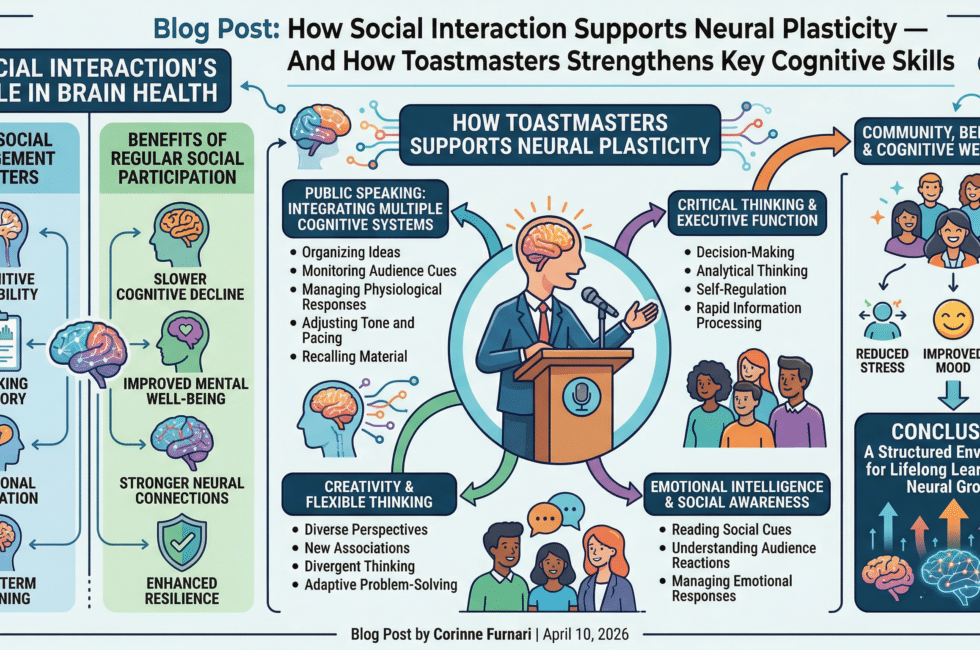
Toastmasters meetings combine routine, challenge, and supportive feedback — all elements known to promote brain adaptability. The structured speaking roles encourage active thinking, emotional awareness, and communication skills that reinforce neural pathways. Members practice organizing ideas, reading audience cues, and adjusting their delivery in real time, all of which strengthen cognitive engagement and mental agility.
Beyond public speaking, Toastmasters fosters leadership skills that rely on emotional intelligence. Interpreting tone, facial expressions, and group dynamics activates brain regions involved in empathy and self‑regulation. The club environment offers a safe space to practice collaboration, constructive feedback, and confident decision‑making — all of which contribute to long‑term cognitive growth.
For more on communication and cognitive wellness, explore my article on healthy communication habits. Research from the National Institutes of Health also highlights how social engagement supports long‑term brain health.
Conclusion
Social interaction and neural plasticity work together to strengthen key cognitive systems. Toastmasters enhances this process by providing structured practice, community support, and opportunities for continuous skill development. Together, they create a powerful foundation for lifelong learning, emotional resilience, and brain adaptability.
If you’re looking for a supportive place to grow your communication skills, strengthen your confidence, and challenge your brain in meaningful ways, I encourage you to join us at the Better Speakers Toastmasters Club. Whether you’re rebuilding skills after a setback, developing your professional voice, or simply seeking a community that values growth, Toastmasters offers a structure that truly makes a difference. You can learn more about our club, meeting times, and how to get involved by visiting our website: https://betterspeakers.toastmastersclubs.org
