
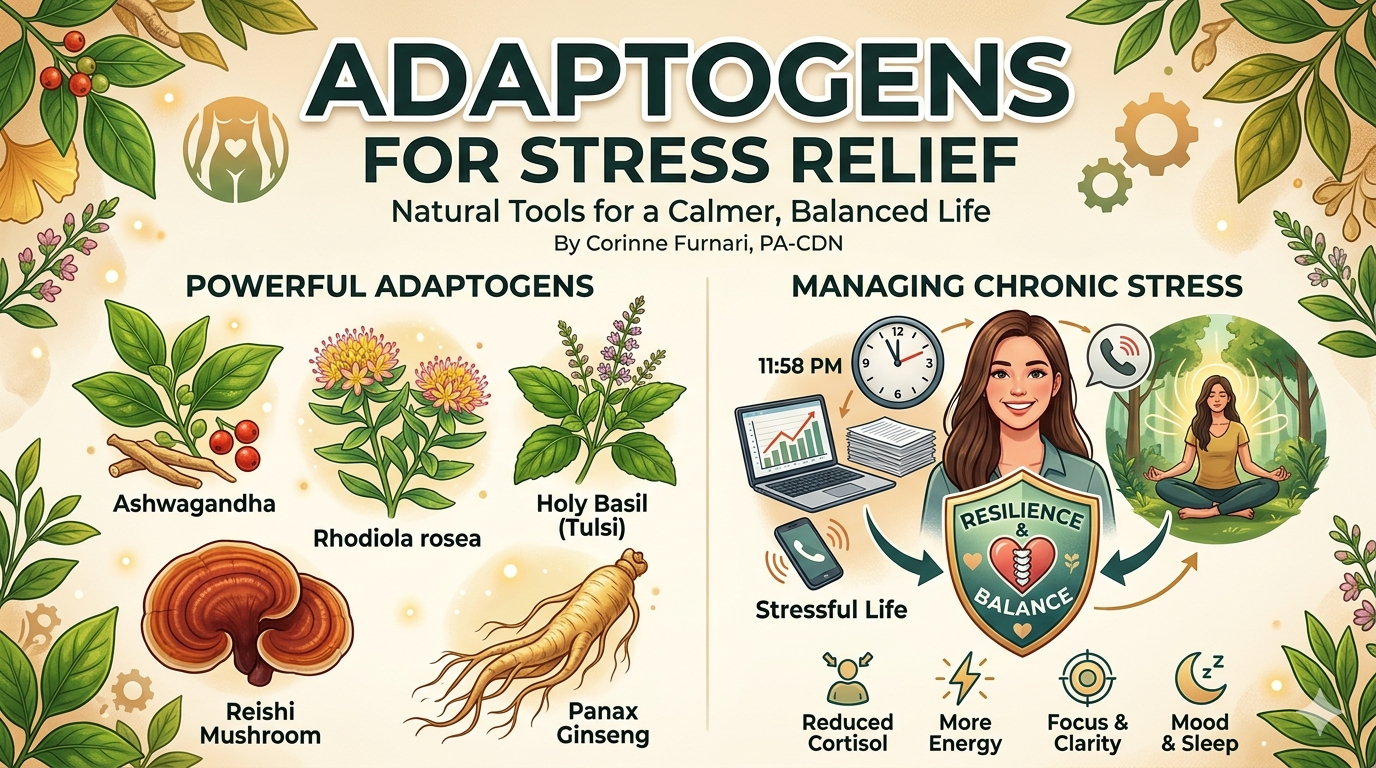
In today’s fast-paced world, chronic stress affects millions of people. From demanding careers and family responsibilities to the constant pressure of modern life, our bodies are often running on high alert. That’s where adaptogens for stress come in — a group of natural herbs, roots, and mushrooms that may help the body better handle and recover from stress.
As a PA-CDN focused on integrative health, I frequently discuss evidence-based natural tools that can complement lifestyle changes. While adaptogens aren’t a cure-all, research suggests they may support resilience, energy, and overall balance when used thoughtfully. Would you like to schedule a personal consultation?
What Are Adaptogens?
Adaptogens are non-toxic plants and fungi traditionally used in Ayurvedic and Chinese medicine. They are defined by their ability to help the body adapt to various stressors — whether physical, mental, or emotional — while promoting homeostasis (balance) without overstimulating or suppressing normal function.
They primarily work by influencing the hypothalamic-pituitary-adrenal (HPA) axis, which regulates cortisol and the body’s stress response. In simpler terms, adaptogens for stress may act like a buffer, helping your system respond more efficiently rather than staying stuck in fight-or-flight mode.
How Can Adaptogens for Stress Help?
Emerging research and traditional use point to several potential benefits:
- Reduced perceived stress and lower cortisol levels
- Improved energy and reduced mental or physical fatigue
- Better focus and cognitive performance under pressure
- Support for mood and sleep quality
- Enhanced overall resilience and immune function
While more large-scale human studies are still needed, certain adaptogens have shown promising results in clinical trials, particularly for stress management.
Best Adaptogens for Stress Relief
Here are some of the most researched and commonly used adaptogens for stress:
- Ashwagandha (Withania somnifera) – Often considered one of the best adaptogens for stress. Multiple studies show it can significantly reduce cortisol, anxiety, and perceived stress after consistent use (typically 240–600 mg of standardized extract daily).
- Rhodiola rosea – Excellent for combating fatigue and mental burnout. It may improve focus and endurance during stressful periods. Best taken earlier in the day.
- Holy Basil (Tulsi) – Traditionally used for emotional balance and mild anxiety support.
- Reishi Mushroom – More calming; often used for relaxation, sleep support, and immune health.
- Panax Ginseng – Associated with energy, cognitive function, and immune modulation.
How to Use Adaptogens for Stress

Adaptogens are available as capsules, powders, teas, or tinctures. Here are some practical tips:
- Start with a low dose and increase gradually to assess tolerance.
- Be consistent — benefits often appear after 2–8 weeks of regular use.
- Match the herb to the time of day: energizing adaptogens (like rhodiola) in the morning; calming ones (like ashwagandha or reishi) in the evening.
- Consider cycling (e.g., 8–12 weeks on, then a short break) if using long-term.
Look for high-quality, third-party tested products to ensure purity and potency.
Important Safety Considerations
While generally well-tolerated, adaptogens for stress are not risk-free. They can interact with medications (blood pressure, thyroid, diabetes, antidepressants, etc.) and may not be suitable during pregnancy, breastfeeding, or with certain health conditions.
Important Disclaimer: This information is for educational purposes only and is not medical advice. Always consult your healthcare provider before starting any new supplement, especially if you have existing medical conditions or take medications.
Final Thoughts
Adaptogens for stress can be a helpful addition to your wellness routine, but they work best when combined with foundational habits: quality sleep, nourishing food, regular movement, and stress-management practices like mindfulness or time in nature.
If you’re curious about trying them, start with one herb at a time and listen to your body. Many people notice improved resilience when pairing adaptogens with consistent lifestyle support.
Have you tried adaptogens for stress? Which ones worked best for you? Share your experience in the comments below!
Corinne Furnari, PA-CDN
Functional & Integrative Health
